Galen Hall
Email: galenh [at] umich.edu
About
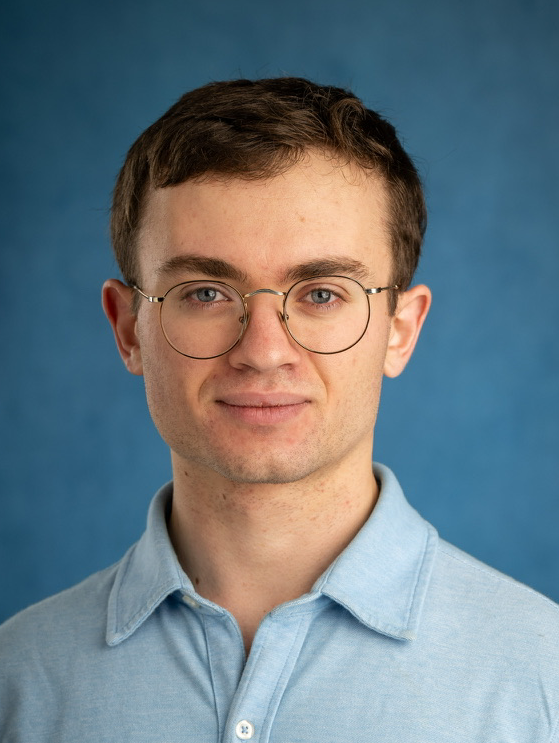
I am a third year PhD student jointly between Physics and Sociology at the University of Michigan. My two wonderful advisors are Elizabeth Bruch and Mark Newman.
I often label myself as a computational social scientist working in the complexity science tradition; basically, I want to develop and use creative theoretical models, paired with well-defined and abundant observational data, to help social science become more predictive, mechanistic, interpretable, and one day paradigmatic.
I like big, rich, wacky datasets and network-based inferential methods and models. The road that brought me here crossed through physics, applied political philosophy, and the sociology and political science of climate change. I still love each of those areas and occasionally work in them, but I am most focused on doing creative empirical computational social science.
I also have ongoing collaborations in neural network interpretability, theoretical community ecology, climate modeling, and evolutionary biology. In my spare time I love oil painting, reading sci-fi and history books, learning to cook, and rock climbing, running, or biking as much as possible.
Research And Projects
I build and use computational models, network methods, and large observational datasets to study social systems. I am especially interested in interest groups, lobbying, climate politics, and how social science can become more predictive and mechanistic.
Working Papers
- Indexing American Interest Groups. Automated classification of state interest group populations using LLM-augmented semi-supervised learning, classifying over 25,000 organizations into 117 industry categories across all 50 U.S. states.
- Multilayer Community Contribution. Inferring the contribution each layer makes to the community structure of a multilayer network, using a Bayesian Poisson stochastic block model with size-aware priors.
Published and Accepted Papers
- The American Corporate Elite in the Twenty-First Century: Cohesive or Fragmented? Chapter.
- MetaOthello: A Controlled Study of Multiple World Models in Transformers. Paper. Scholar.
- Where Ideology Meets Private Interest: The Three-part Composition of Climate Obstruction in the United States. Paper.
- Climate Coalitions and Anti-coalitions: Lobbying across State Legislatures in the United States. Paper.
- CHORUS: A New Dataset of State Interest Group Policy Positions in the United States. Paper. See also howdotheylobby.org.
- Climate Policy Conflict in the US States: A Critical Review and Way Forward. Paper.
- Who Delays Climate Action? Interest Groups and Coalitions in State Legislative Struggles in the United States. Paper.
- Obstructing Action: Foundation Funding and US Climate Change Counter-Movement Organizations. Paper.
- Ethical Choices Behind Quantifications of Fair Contributions Under the Paris Agreement. Paper.
Public Writing
- The faulty science, doomism, and flawed conclusions of Deep Adaptation. Critical response to Deep Adaptation: A Map for Navigating Climate Tragedy. Featured in The New York Times. Article.
Talks
- MetaOthello: A Controlled Study of Multiple World Models in Transformers. Program.
- Machine Learning for Discovery: Uncovering Novel Preference Configurations in Online Dating. Program.
- What Makes a Layer Important? Measuring Layer Contributions to Multilayer Community Structure. Program.
- Climate Coalitions and Anti-coalitions: Lobbying in the U.S. States.
- Disentangling Politics and Policymaking: Interest Group Coalitions and Parties in the American States.
- Power in numbers: insights from new data on lobbying in the United States.
- Unveiling Interest Group Preferences in the American States.
- Unveiling Interest Group Preferences in the American States.
CV
Education
- Ph.D. in Physics and Sociology (Joint). Pre-candidate for Ph.D. GPA: 4.0. Courses include Social Theory 1 and 2, Social Demography, Economic Sociology, Intro. to Adaptive Systems, Network Science, and Econometrics 1 and 2.
- Sc.B. in Physics (Honors). GPA: 3.93. Honors: Magna Cum Laude, Phi Beta Kappa, nominated for Sigma Xi.
- Visiting Student. Focus: Physics and Philosophy. GPA: 4.0 converted.
Work Experience
- Researcher (Full-time). Supervisor: Professor Timmons Roberts.
- Researcher (Part-time). Supervisor: Professor Timmons Roberts.
- Researcher (Part-time). Supervisor: Professor Lucas Stanczyk.
- Researcher / Software Developer (Full-time). Supervisor: Professor Andy Van Dam.
Grants
- NSF Graduate Research Fellowship. Fellowship funding three years of graduate school stipend and tuition.
- CSSN Research Grant. Research on climate policy and interest groups at the state level, with Joshua Basseches and Rebecca Bromley-Trujillo. Funding source: Climate Social Science Network.
- Brown University SPRINT Award. Summer research extending undergraduate thesis results and preparing for academic article submission.